
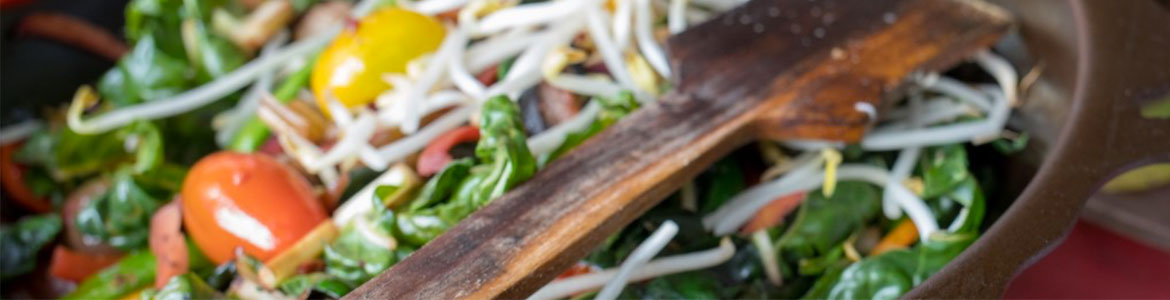
Not all cooking oils behave the same, and with so many options available, it can be hard to know which is best for cooking and which is best for seasoning.
Some oils are better suited to high heat cooking, others to gentler heat, and some are best kept off the heat altogether for dressings, dips, and finishing.
When choosing an oil, it helps to consider smoke point, intended use, flavour, and personal preference. Understanding these differences will help you cook more effectively, choose the right oil for each job, and get the best results when seasoning your iron cookware.
While you can cook with almost any oil or fat you prefer, seasoning is about performance. For seasoning wrought iron pans, the best oils are those with a high smoke point, strong heat stability, and ideally a neutral flavour. These oils can handle the temperatures needed to form a stable, durable seasoning layer on your pan.
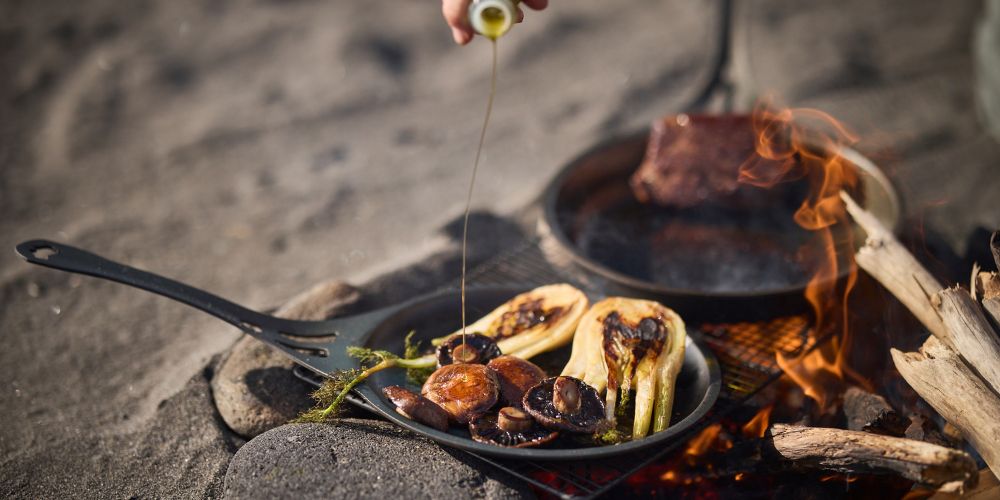
For seasoning iron cookware, the most important factor is heat stability.
Choose stability first and flavour neutrality second.
You need an oil that can handle high temperatures and properly polymerise into a hard, protective layer when heated.
In general, refined oils tend to work better for seasoning, as they have higher smoke points and fewer impurities, allowing them to handle the temperatures needed for proper polymerisation.
Once oil has polymerised, it is no longer about flavour or nutrition, as it becomes part of the forever renewable surface of the pan.
Technically, almost any oil or fat can build seasoning over time, but some do this far more effectively than others.
The smoke point of an oil is the temperature where it starts to visibly smoke and degrade.
Once an oil passes its smoke point:
it loses stability
flavour can become bitter
it stops performing well in cooking
and doesn’t tend to form a good seasoning layer on iron.
Key rule:
Match your oil to your cooking temperature.
For seasoning, heat stability is everything. The best oils are those that remain stable at high temperatures and form durable seasoning layers over time.
.jpg)
These oils form strong, long-lasting seasoning layers that protect your pan and improve performance over time.
Olive oil, especially extra virgin. Refined olive oil can be used, but tends to produce less consistent, less durable seasoning than more stable oils like rice bran or grapeseed
Butter
Other low smoke point or delicate, infused oils.
These can break down before proper polymerisation occurs, leading to sticky, uneven, or short-lived seasoning.
We use natural non-GMO rice bran oil to pre-season AUS-ION™ pans because it delivers consistent, reliable results at high heat and is the perfect base for cooks to start with.
You can then continue to build and refresh your seasoning your own way and cook with any number of oils or fats.
For maintaining your pan we've also perfected a seasoning kit made of eco-friendly care essentials with our renowned Seasoning Conditioner Bar, combining natural Australian-sourced beeswax, pure coconut oil and avocado oil.
To make this easier to compare at a glance, here’s a quick guide to common oils and how they perform under heat.
.png)
High smoke point oils remain stable at high temperatures and are ideal for searing, frying, roasting, and seasoning iron cookware.
These oils allow for proper polymerisation, forming a strong, durable non-stick surface.
Medium smoke point oils are best suited to sautéing, baking, browning, and suit most everyday cooking.
They perform well at moderate temperatures but are not ideal for sustained high heat and are generally less effective for seasoning compared to high smoke point oils.
Low smoke point oils are best for gentle everyday cooking and adding flavour, as they tend to break down at higher temperatures and are therefore not suitable for the initial seasoning of your pan.
Examples:
These oils should generally not be heated. Instead, they can be used to add flavour for salads and finishing dishes.
Examples:
Flaxseed oil (unrefined)
Unrefined almond oil.
.png)
There’s a lot of debate around which cooking oil is “healthiest”. In general, factors like fat composition, heat stability, and level of processing all play a role.
Oil quality can also vary considerably, so it’s worth sourcing quality oils from a reputable manufacturer. Oils such as olive oil, avocado oil, rice bran oil, and grapeseed oil are commonly chosen for cooking, while palm oil is often discussed in relation to sustainability concerns.
It’s also worth remembering that an oil that works well nutritionally for everyday cooking, such as olive oil, may not be the best choice for re-seasoning an iron pan.
For re-seasoning, the most important factor is heat stability. Once heated and polymerised onto the iron, the oil becomes a hard, inert, stable layer that helps protect the pan and create a natural non-stick surface.
So while everyday cooking may come down to preference, seasoning is about performance.
.jpg)
Solidteknics iron cookware comes pre-seasoned and ready to cook straight out of the box. From there, it’s easy to maintain: simply cook regularly with oils and fats, or refresh the surface with a stovetop or oven re-season whenever needed.
Unlike synthetic coatings that wear out over time, seasoning is a naturally renewable cooking surface that improves with use. Seasoning also helps protect your pan from rust and, over time, creates a surface that often requires less added oil.
With the right oil and heat, you’re not maintaining a coating: you’re building a better pan every time you cook.
SHOP NOW
Copyright © 2026 SOLIDTEKNICS PTY LTD. All Rights Reserved
ABN: 17600300481. E-commerce software by Neto
In the spirit of reconciliation Solidteknics acknowledges the Traditional Custodians of country throughout Australia and their connections to land, sea and community. We pay our respect to their Elders past and present and extend that respect to all Aboriginal and Torres Strait Islander peoples today.